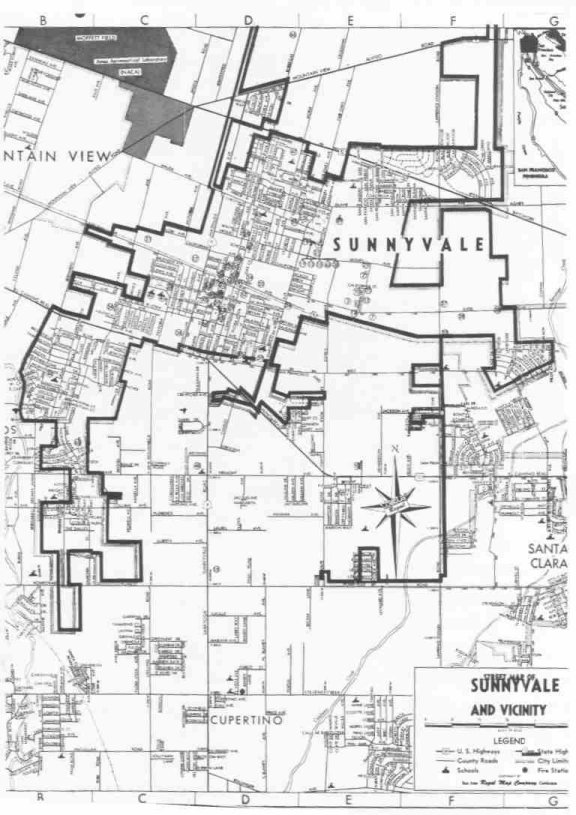
Lakewood Village is a residential neighborhood of roughly 1,600 homes tucked into the northeast corner of Sunnyvale, California, right at the border with the city of Santa Clara. We sit near the western tip of the so-called "Golden Triangle" formed by US 101, CA-237, and I-880, which puts us within easy reach of just about anywhere in the South Bay.
The Lakewood Village Neighborhood Association (LVNA) is an all-volunteer organization that represents the residents of Lakewood Village, coordinates community events, and serves as a working liaison between neighbors and the City of Sunnyvale.
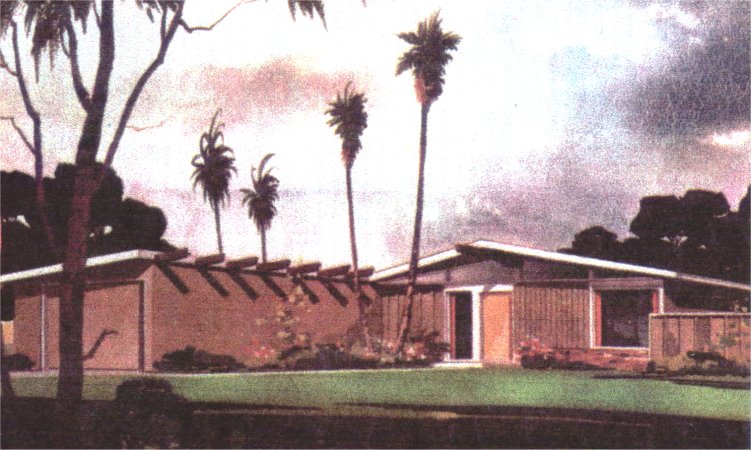
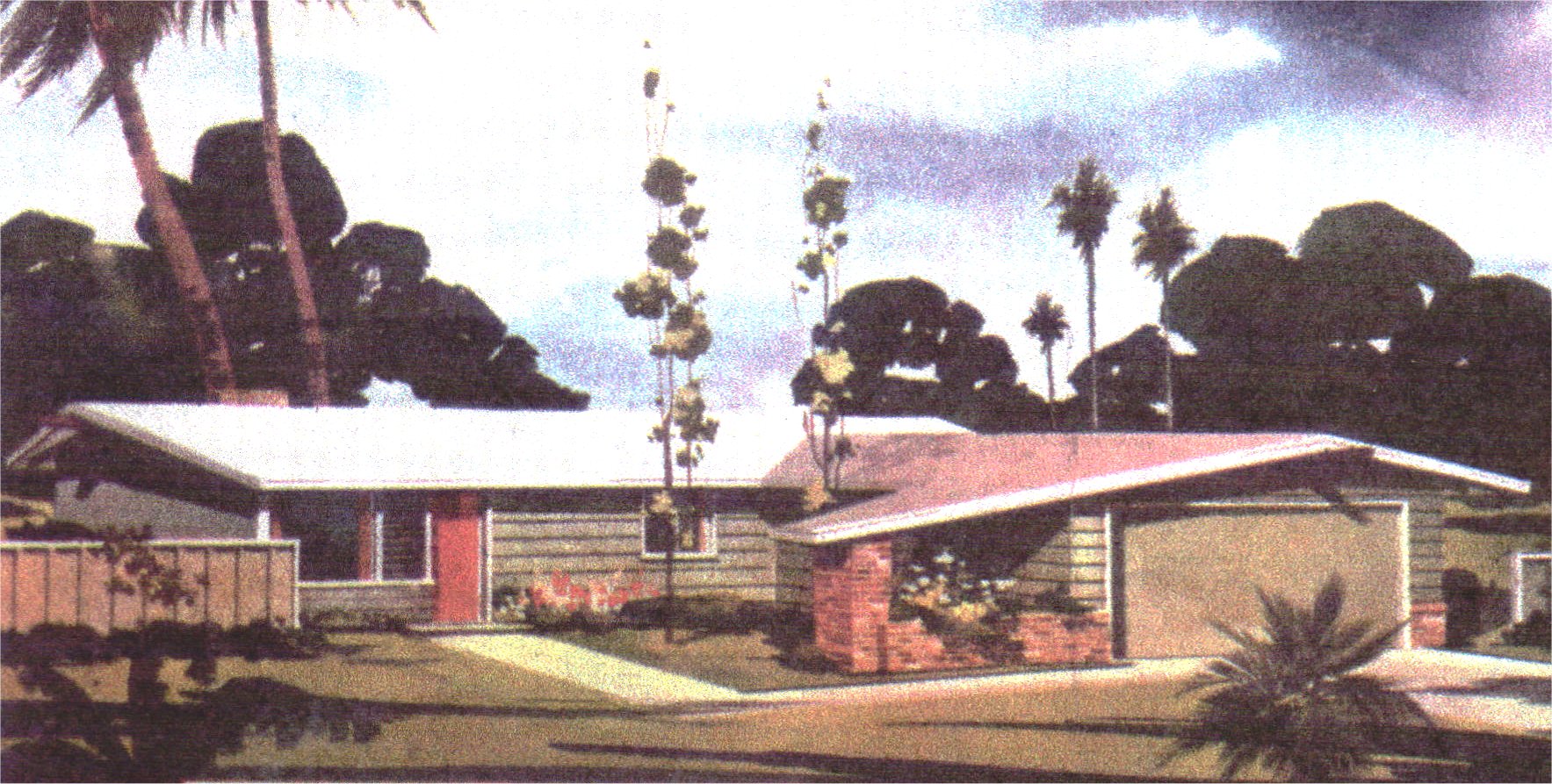
Most of the homes in Lakewood Village are single-family, three-bedroom, two-bath houses built as a single tract in the mid- to late-1950s. A handful of duplexes have been added in the years since, and many of the original homes have been remodeled or expanded over the decades.
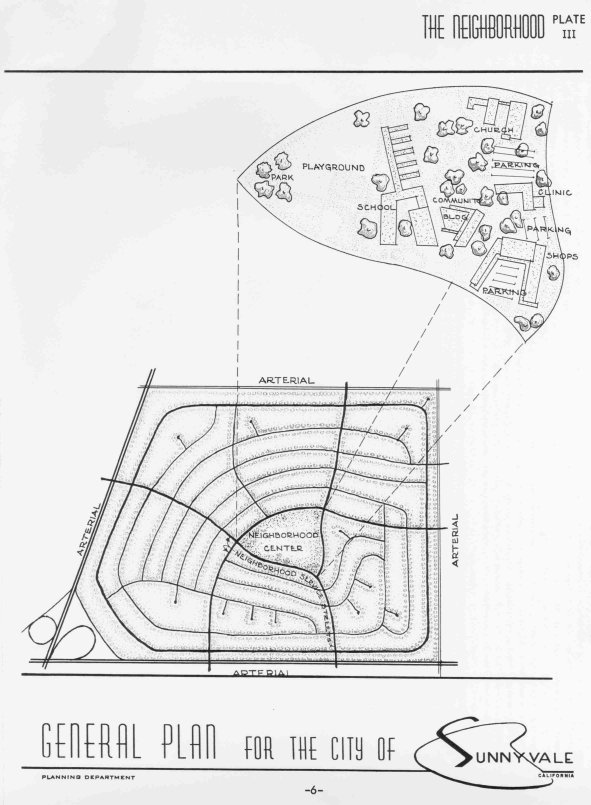
Two neighborhood elementary schools, two parks, a greenbelt along the old Hetch-Hetchy right-of-way, and a nearby regional park give residents plenty of green space for play, exercise, and gatherings. A small shopping plaza serves the neighborhood directly, with larger shopping, dining, and entertainment options just a short drive away.
Commuting is one of the area's quiet advantages. US 101 and CA-237 are only blocks away; I-880, I-280, and CA-85 are a short freeway or expressway hop. Bus service runs through the neighborhood, and express buses, light rail, and Caltrain are all within roughly a mile.
Construction of Lakewood Village began around 1955 and wrapped up sometime in 1957 or 1958. The neighborhood was developed in four sequential stages, each labeled as a "Unit":
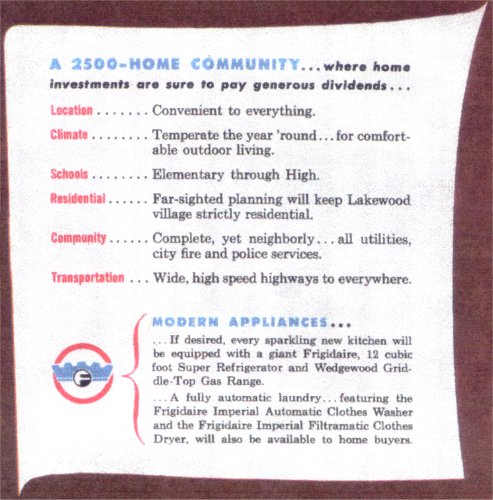
The tract was built largely to meet demand for affordable housing among civilian and military workers at nearby Moffett Field. Original homes sold somewhere in the range of $11,000 to $15,000, with mortgage payments under $100 a month and move-in costs under $500. Special terms were available to veterans.
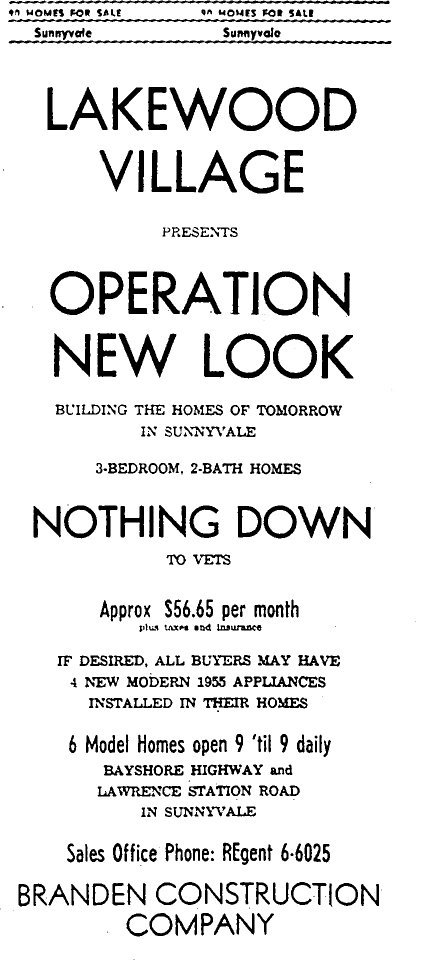
Around twenty floor plans were offered, every one a three-bedroom, two-bath layout. Marketing materials promised as many as 2,500 homes; the final neighborhood landed at closer to 1,600. Two of the most popular models were the one-car-garage "Biscayne" and the two-car-garage "Nassau" — chances are good your home is descended from one of them.
The LVNA's predecessor was the Lakewood Village Residents Association (LVRA), formed in January 1958, just as the neighborhood itself was being completed. The LVRA ran on modest annual dues of $2.00 to $2.50 per household, supplemented by bake sales, rummage sales, and contributions from local merchants. At its peak it counted more than 1,000 member households, and for much of its life it was the only active neighborhood association in Sunnyvale.
Especially during its first five years, the LVRA was remarkably busy. Among its accomplishments, it:
The LVRA wound down sometime in the mid-1970s. The current Lakewood Village Neighborhood Association was founded in October 1991 with three guiding goals: to educate residents and raise awareness of local issues, to give neighbors opportunities to meet one another, and to bring the community together.
The LVNA has carried forward many of the LVRA's traditions, including regular meetings, publication of The Villager, and signature events like the picnic and holiday parade. Working with the City, the LVNA has helped secure improvements such as the renovation of Fairwood Park and the landscaping of the Hetch-Hetchy right-of-way as a neighborhood greenbelt. Several past LVNA officers have gone on to broader civic roles in Sunnyvale and the surrounding region.
Unlike the old LVRA, the LVNA does not collect dues. Every resident of Lakewood Village is automatically a member. The organization is funded primarily by advertising revenue from The Villager, which is delivered to homes throughout the neighborhood by volunteer walkers.
The LVNA is governed by a simple structure of five elected officers — President, 1st Vice President, 2nd Vice President, Secretary, and Treasurer — supported by appointed roles such as the Newsletter Editor, Newsletter Advertising lead, Newsletter Walker coordinators, and Webmaster. Elections are held annually, typically in the spring. The association operates under a written set of by-laws and holds Board, General, and Special meetings throughout the year.
The LVNA only works because neighbors show up for it. Whether that means coming to a general meeting, helping out at the picnic or holiday parade, walking a block to deliver The Villager, advertising in the newsletter, or running for office — there's a way to plug in at just about any level of time commitment.
To find the next meeting or event, check our Events page. To read the latest newsletter, visit The Villager. And to reach a board member or ask a question, head over to the Contact page.
